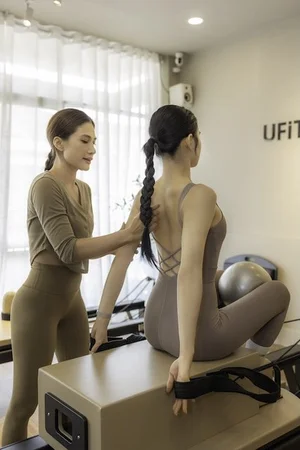
Pilates: Your Path to Strength, Flexibility & Balance
What is Pilates and why is it considered a mind-body exercise?
Pilates is a unique form of exercise that emphasizes controlled movements and heightened body awareness.
Often described as a mind-body workout, it encourages a deep connection between physical activity and mental
focus by integrating physical activity with mental clarity. Developed in the early 20th century, Pilates was originally
designed to help dancers recover from injuries and regain strength.
Combining aspects of calisthenics, yoga, and ballet, Pilates enhances strength and flexibility, particularly in the
core muscles. It promotes balanced muscle development throughout the body, helping to improve overall mobility
and stability. This balanced approach contributes to improved posture and reduced risk of injury.
When it first emerged, Pilates was known as "Contrology," a name that highlighted its emphasis on precise
muscle control. The practice involves deliberate, slow movements paired with steady breathing and focused
engagement of specific muscle groups. Core principles like concentration, control, and mindfulness are central
to the method, reinforcing the connection between the mind and the body. Participating in a reformer Pilates
class can be a great way to experience these elements in action and deepen your understanding of the practice.
The benefits of Pilates are wide-ranging. It can lead to better posture, increased flexibility, improved strength,
enhanced balance, and greater body awareness. Each exercise is performed with intention, guiding the body
through controlled ranges of motion. By focusing on core stability, proper alignment, and mindful breathing,
Pilates helps unify mental clarity with physical strength, making it a comprehensive mind-body exercise.
How does Pilates emphasize breath work, muscle control, spinal alignment, and pelvic mobility?
Pilates offers a holistic approach to fitness, emphasizing breath, muscle precision, spinal health, and pelvic
flexibility. It nurtures a strong mind-body connection by engaging the core and using intentional breathing to
enhance movement quality. Pilates achieves this through several key elements:
At the heart of it all is the core. Reformer Pilates group sessions are specifically designed to build core strength,
laying the foundation for smoother, more efficient movement in everyday life. A strong core supports the spine,
improves posture, and enhances athletic performance.
What are the key benefits of practicing Pilates?
Practicing Pilates offers a range of benefits, including increased flexibility, enhanced muscle strength, and im-
proved control and stamina. Pilates emphasizes strengthening the core muscles, which are essential for main-
taining balance and promoting efficient movement. Consistent practice leads to more defined muscles and a
sculpted physique. Pilates also enhances coordination and stability, helping to prevent falls and reduce the risk of
injury. Heightened body awareness improves posture, leading to better alignment and reduced joint strain.
Participating in a reformer Pilates group class can amplify these benefits. Skilled instructors provide guidance,
and the supportive community fosters commitment, leading to enhanced results. Group classes also introduce
a social element, making workouts more enjoyable and providing opportunities to learn from others.
How can Pilates improve core strength, muscle tone, balance, and coordination?
Pilates is a low-impact workout that strengthens your core, tones muscles, and enhances balance and coordi-
nation through intentional, controlled movements. It emphasizes proper breathing and precise form to maximize
effectiveness. Pilates supports core strength, muscle tone, and overall stability in several ways.
Can Pilates help with injury recovery and lower back pain?
Pilates can play a valuable role in recovery from injuries and in easing lower back pain. By focusing on core
strength, better posture, and proper spinal alignment, it helps the body move more efficiently and with less strain.
The slow, deliberate movements typical of Pilates are gentle on the joints, making it a supportive option during
the healing process. It's also widely recognized as an effective rehabilitation tool for various physical conditions.
How does Pilates help with lower back pain?
Lower back discomfort often stems from weak core muscles or poor posture. Pilates addresses these underlying
issues by strengthening the core and improving alignment, which can relieve pain and reduce the chance of
recurring problems. Pilates done correctly should help with lower back pain in the long term.
Can Pilates assist with existing injuries?
Absolutely. Pilates is often used to manage chronic musculoskeletal conditions. It helps build a stable base for
recovery, supports the spine and joints, and can ease ongoing pain. For those dealing with lower back issues,
group reformer Pilates classes may offer noticeable relief. Pilates supports injury recovery through low impact and form that follows the body’s Kinesiology.
How does Pilates help prevent injuries?
By addressing muscle imbalances and refining how the body moves, Pilates helps reduce the likelihood of future
injuries. It promotes better posture and body awareness, which can make your movements more efficient and
your body more resilient over time.
What's the difference between Mat Pilates and Reformer Pilates?
Pilates combines floor-based exercises with movements performed on specialized equipment. Mat Pilates uses
your own body weight for resistance through controlled floor motions, focusing on core strength and stability.
Reformer Pilates utilizes a reformer machine, which adds adjustable resistance and support, enabling a wider
range of exercises and targeting specific muscle groups. The reformer can assist beginners in performing
exercises correctly while also challenging advanced practitioners with increased resistance.
How can I get started with Pilates?
If you're new to Pilates, a good starting point is with mat classes or beginner sessions using the reformer ma-
chine. Many studios offer programs specifically tailored for newcomers; joining a group reformer class can be
an enjoyable and motivating way to ease into the practice.
Working with certified instructors is crucial, as they’ve undergone extensive training and can ensure you're
performing each movement safely and correctly. These beginner-friendly programs introduce the fundamentals
gradually, helping you develop proper technique and build strength without overwhelming your body or risking
injury. Look for instructors certified by reputable organizations like the Pilates Method Alliance (PMA) to ensure
quality instruction. Starting slowly and focusing on proper form will help you build a solid foundation for long-term
success in Pilates.